Polyetherimide Market Size, Share, Growth and Forecast (2026 - 2036)
Polyetherimide Market is segmented by Grade (Unfilled, Glass-filled, Others), Application (Electronics, Automotive, Others), End Use (Industrial, Consumer, Aerospace/Others), and Region. Forecast for 2026 to 2036.
Polyetherimide Market Size, Market Forecast and Outlook By Fact.MR
The polyetherimide market was valued at USD 1.40 billion in 2025, projected to reach USD 1.48 billion in 2026, and is forecast to expand to USD 2.66 billion by 2036 at a 6.00% CAGR. Based on Fact.MR analysis, the absolute gain of USD 1.17 billion over the forecast decade reflects durable structural demand across key end-use verticals shaped by industrial expansion, regulatory requirements, and technology adoption cycles.
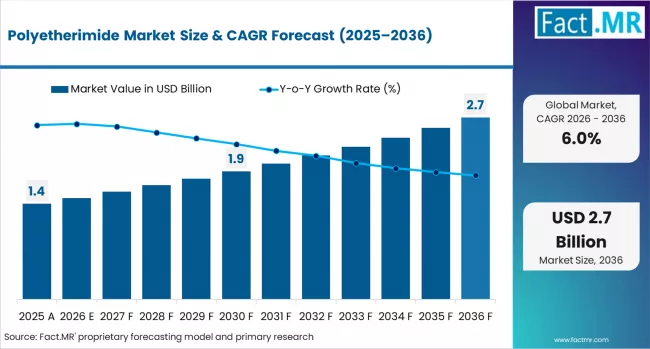
Summary of Polyetherimide Market
- Demand Drivers in the Market
- Semiconductor fabrication equipment capacity expansion driven by government-funded chip manufacturing programs in the USA (CHIPS Act), EU (European Chips Act), and Japan is generating demand for PEI wafer carrier trays, process chamber components, and test socket materials qualified to semiconductor equipment OEM standards.
- Electric vehicle high-voltage system components including battery management connector housings, DC-DC converter insulation, and inverter terminal blocks require PEI's continuous use temperature above 150 degrees Celsius and inherent UL 94 V-0 flame performance to meet automotive safety specifications.
- Medical device sterilizable component demand for surgical instrument handles, endoscope components, and dental device housings requiring repeated autoclave sterilization at 134 degrees Celsius is driving adoption of PEI as the standard material for heat-resistant, biocompatible structural components.
- Key Segments Analyzed in the Fact.MR Report
- Unfilled (Grade): 46% share in 2026, unfilled PEI holds 46% of grade share as the standard amorphous form provides the inherent flame retardancy, electrical insulation, and dimensional stability required for electronics component housing, medical device, and semiconductor equipment applications without reinforcement addition
- Electronics (Application): 37% share in 2026, electronics applications account for 37% of demand as PEI is the material of choice for semiconductor wafer carrier trays, IC test sockets, high-temperature PCB connectors, and electrical insulation components requiring simultaneous flame retardancy and precision dimensional stability
- USA: 6.5% CAGR through 2036, driven by semiconductor manufacturing equipment component demand, aerospace structural component adoption, and medical device applications requiring PEI's high continuous use temperature and sterilizability
- Analyst Opinion at Fact.MR
- The polyetherimide market is growing at a faster rate than most high-performance engineering thermoplastics due to the convergence of three structural demand drivers that operate independently: semiconductor manufacturing equipment expansion, EV high-voltage component adoption, and medical device sterilizability requirements. Semiconductor equipment is the highest-margin application, where PEI wafer carriers and process equipment components are specified by fabrication equipment OEMs under proprietary material qualification programs. The EV transition is creating demand for high-temperature electrical connectors and bus bar insulators that require PEI's combination of dimensional stability above 150 degrees Celsius and UL 94 V-0 flame performance. SABIC's dominant market position through the ULTEM brand creates both a pricing advantage and a supply concentration risk that is prompting downstream processors to qualify alternative PEI grades from second-source producers.
- Strategic Implications / Executive Takeaways
- PEI producers should pursue semiconductor equipment OEM material qualification programs as the primary value-creation pathway, as qualified material status at major equipment OEMs creates multi-year captive demand that is highly resistant to competitive substitution once established.
- Development of ISO 10993-compliant medical-grade PEI formulations with documented biocompatibility testing should be accelerated to capture the growing medical device segment, where sterilizability and biocompatibility certification are the primary procurement qualifiers.
- Investment in glass-fiber compounding capability for automotive-grade PEI should be evaluated to address the EV high-voltage component segment, where glass-reinforced PEI provides the combination of structural rigidity and thermal performance required for connector and terminal block applications.
Polyetherimide Market Key Takeaways
| Metric | Details |
|---|---|
| Industry Size (2026) | USD 1.48 billion |
| Industry Value (2036) | USD 2.66 billion |
| CAGR (2026-2036) | 6.00% |
| Source | Fact.MR, 2026 |
As per Fact.MR analysis, polyetherimide (PEI) is a high-performance amorphous thermoplastic with a continuous use temperature above 170 degrees Celsius, inherent flame retardancy (UL 94 V-0 without additives), and excellent dimensional stability, positioning it for demanding electronics, semiconductor, aerospace, and medical device applications. SABIC's ULTEM brand holds approximately 31% of market share as the technology originator with the broadest application qualification base. Unfilled grades hold 46% of grade share as standard amorphous PEI provides the balance of strength, transparency, and electrical performance required for most electronics and medical applications without reinforcement addition.
North America and Europe lead global PEI consumption in high-value aerospace and medical applications. Asia Pacific is the fastest-growing region anchored to semiconductor manufacturing equipment and consumer electronics demand in South Korea, Japan, and China. Country-level CAGRs reflect divergent demand trajectories: USA (6.5% CAGR), Mexico (6.1% CAGR), Germany (5.7% CAGR), France (5.6% CAGR), UK (5.5% CAGR), South Korea (5.3% CAGR), Japan (5.2% CAGR). Mature markets sustain replacement and upgrade volumes while high-growth economies add new-build and capacity-expansion demand.
Why is the Polyetherimide Market Growing?
Market expansion is being supported by the increasing global aerospace industry growth and automotive lightweighting trends driven by fuel efficiency requirements and performance optimization needs, alongside the corresponding demand for advanced engineering plastics that can enhance structural performance, enable weight reduction, and maintain operational reliability across various aerospace components, automotive applications, electronics housing, and industrial processing equipment.
Modern aerospace manufacturers and automotive engineers are increasingly focused on implementing polyetherimide solutions that can improve performance characteristics, enhance design flexibility, and provide consistent reliability in demanding operating conditions.
The growing emphasis on sustainable design and performance optimization is driving demand for polyetherimide that can support lightweight construction, enable fuel efficiency improvements, and ensure comprehensive performance reliability.
Advanced manufacturing industry manufacturers' preference for high-performance materials that combine mechanical excellence with temperature resistance and processing versatility is creating opportunities for innovative polyetherimide implementations.
The rising influence of electric vehicle development and next-generation electronics is also contributing to increased adoption of polyetherimide that can provide superior material properties without compromising design flexibility or performance requirements.
Segmental Analysis
The market is segmented by grade, application, and end use. By grade, the market is divided into unfilled, glass-filled, and others. Based on application, the market is categorized into electronics, automotive, and others. By end use, the market is split between industrial, consumer, and aerospace/others applications.
By Grade, the Unfilled Segment Leads the Market
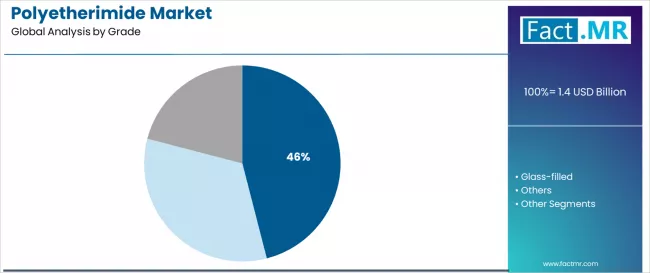
The unfilled grade segment is projected to maintain its leading position in the polyetherimide market in 2026 with a 46.0% market share, reaffirming its role as the preferred material grade for general high-performance applications and processing flexibility requirements.
Manufacturers and engineers increasingly utilize unfilled polyetherimide for its superior processing characteristics, excellent design flexibility, and proven effectiveness in diverse applications while maintaining cost-effectiveness and manufacturing efficiency.
Unfilled technology's proven effectiveness and application versatility directly address the industry requirements for reliable high-performance materials and design optimization across diverse engineering applications and product categories.
This grade segment forms the foundation of modern engineering plastics applications, as it represents the material with the greatest contribution to design flexibility and established processing record across multiple industrial applications and manufacturing processes. Advanced materials industry investments in high-performance polymer technologies continue to strengthen adoption among manufacturers and engineers.
With increasing demand for versatile engineering materials and cost-effective high-performance solutions, unfilled grades align with both performance objectives and economic requirements, making them the central component of comprehensive advanced materials strategies.
By Application, the Electronics Segment Dominates Market Demand
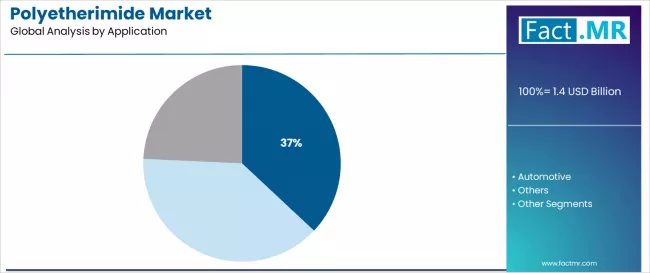
The electronics application segment is projected to represent the largest share of polyetherimide demand in 2026 with a 37.0% market share, underscoring its critical role as the primary driver for polyetherimide adoption across electronic device housing, circuit components, and advanced electronic systems.
Electronics manufacturers prefer polyetherimide for electronic applications due to its exceptional electrical properties, excellent thermal stability, and ability to provide reliable performance while supporting miniaturization and advanced functionality objectives. Positioned as essential materials for modern electronics manufacturing, polyetherimide offers both performance advantages and design benefits.
The segment is supported by continuous innovation in electronics technology and the growing availability of specialized polyetherimide grades that enable superior electronic performance with enhanced thermal management and improved component reliability.
Electronics manufacturers are investing in comprehensive material programs to support increasingly demanding performance requirements and market demand for advanced electronic devices with superior functionality.
As electronics standards advance and performance complexity requirements increase, the electronics application will continue to dominate the market while supporting advanced polyetherimide utilization and electronic system optimization strategies.
By End Use, the Industrial Segment Commands Market Leadership
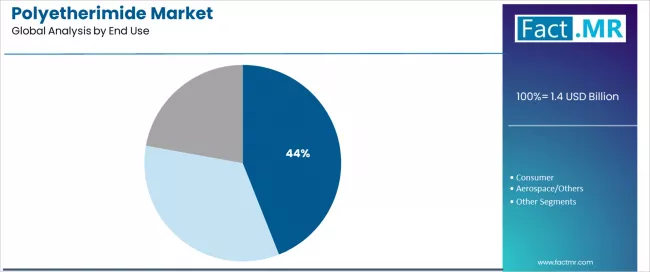
The industrial end use segment is projected to maintain the largest share of polyetherimide consumption in 2026 with a 44.0% market share, highlighting its fundamental role in industrial equipment, processing machinery, and advanced manufacturing applications.
Industrial manufacturers prefer polyetherimide for its comprehensive performance properties, temperature resistance, and proven effectiveness in demanding applications requiring superior mechanical characteristics and operational reliability. This segment represents the backbone of polyetherimide consumption across multiple industrial sectors and manufacturing processes.
The industrial segment benefits from ongoing technological advancement in manufacturing processes and the expanding adoption of high-performance materials in critical industrial applications.
Industrial demand continues to grow due to increasing performance requirements, rising operational efficiency needs, and the requirement for materials that can support complex industrial processes while maintaining cost-effectiveness.
As industrial applications become more sophisticated and performance requirements increase, the industrial end use segment will continue to drive market growth while supporting advanced polyetherimide utilization and industrial optimization strategies.
What are the Drivers, Restraints, and Key Trends of the Polyetherimide Market?
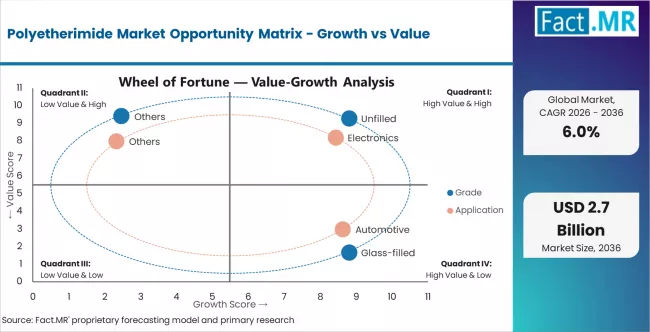
The polyetherimide market is advancing rapidly due to increasing aerospace industry growth and automotive lightweighting trends driven by fuel efficiency requirements and performance optimization needs, growing adoption of advanced electronics technologies that require high-performance polymer materials providing enhanced thermal stability and mechanical properties across diverse aerospace components, automotive applications, electronics housing, and industrial processing equipment.
The market faces challenges, including high material costs compared to standard polymers, complex processing requirements and specialized equipment needs, and competition from alternative high-performance materials and metal substitutes. Innovation in processing technologies and cost optimization continues to influence product development and market expansion patterns.
Expansion of Aerospace Industry and Advanced Aviation Applications
The growing aerospace industry development is driving demand for high-performance materials that address aviation requirements including weight reduction, temperature resistance, and structural reliability in aerospace component and system applications. Aerospace applications require advanced polyetherimide formulations that deliver superior mechanical performance across multiple operational parameters while maintaining regulatory compliance and safety standards.
Aerospace manufacturers are increasingly recognizing the competitive advantages of polyetherimide integration for weight reduction and performance optimization, creating opportunities for innovative material technologies specifically designed for next-generation aerospace applications.
Integration of Electric Vehicle Development and Automotive Innovation
Modern automotive manufacturers are incorporating electric vehicle technologies and lightweight design approaches to enhance fuel efficiency, address environmental requirements, and support comprehensive performance objectives through optimized material selection and advanced manufacturing processes.
Leading companies are developing electric vehicle components, implementing lightweighting strategies, and advancing automotive technologies that maximize performance while minimizing weight and environmental impact.
These approaches improve vehicle performance while enabling new market opportunities, including electric vehicle applications, autonomous vehicle systems, and advanced automotive technologies.
Development of Next-Generation Electronics and Advanced Device Applications
The expansion of advanced electronics, miniaturized devices, and high-performance electronic systems is driving demand for polyetherimide with enhanced electrical properties and specialized thermal management capabilities.
These advanced applications require specialized material processing with precise performance profiles and exceptional reliability that exceed traditional polymer requirements, creating premium market segments with differentiated performance propositions.
Manufacturers are investing in advanced material capabilities and electronic application research programs to serve emerging high-performance electronics applications while supporting innovation in electronic device technology and advanced system integration.
Analysis of the Polyetherimide Market by Key Countries
.webp "Top Country Growth Comparison Polyetherimide Market Cagr (2026 2036)")
| Country | CAGR (2026-2036) |
|---|---|
| USA | 6.5% |
| Mexico | 6.1% |
| Germany | 5.7% |
| France | 5.6% |
| Japan | 5.2% |
| South Korea | 5.3% |
| UK | 5.5% |
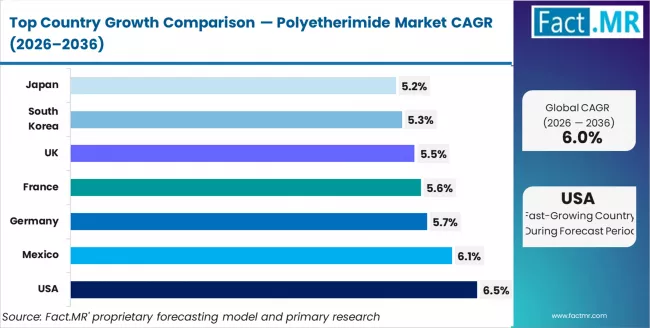
The polyetherimide market is experiencing robust growth globally, with the USA leading at a 6.5% CAGR through 2036, driven by expanding aerospace industry and growing advanced manufacturing, alongside increasing investment in high-performance materials and electronics innovation. Mexico follows at 6.1%, supported by aerospace manufacturing growth, expanding automotive sector, and increasing demand for advanced materials in domestic and export markets.
Germany shows growth at 5.7%, emphasizing automotive innovation, aerospace excellence, and advanced materials development. France demonstrates 5.6% growth, supported by aerospace industry leadership and advanced manufacturing development.
The UK records 5.5%, focusing on aerospace innovation and high-performance materials applications. South Korea exhibits 5.3% growth, emphasizing electronics manufacturing and advanced materials applications. Japan shows 5.2% growth, emphasizing quality standards and specialized high-performance applications.
The report covers an in-depth analysis of 40+ countries; seven top-performing countries are highlighted below.
USA Leads Global Market Growth with Aerospace and Advanced Manufacturing Expansion
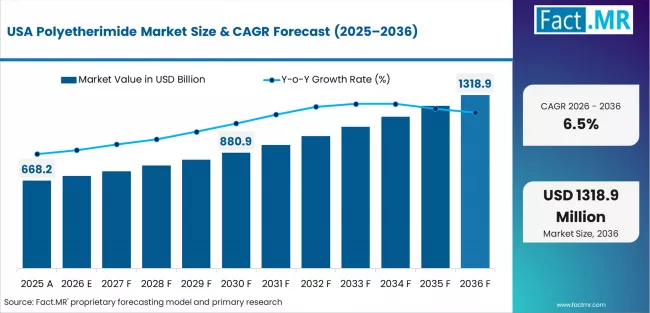
Revenue from polyetherimide in the USA is projected to exhibit exceptional growth with a CAGR of 6.5% through 2036, driven by expanding aerospace industry and rapidly growing advanced manufacturing supported by defense spending and commercial aviation growth initiatives.
The country's substantial aerospace sector and increasing investment in high-performance material technologies are creating substantial demand for polyetherimide solutions. Major aerospace manufacturers and advanced materials companies are establishing comprehensive polyetherimide utilization capabilities to serve both domestic markets and export opportunities.
- Strong aerospace industry growth and expanding advanced manufacturing sector are driving demand for polyetherimide throughout major aerospace regions including Washington, California, and the Southeast aerospace corridors, supporting both commercial aviation and defense manufacturing facilities.
- Growing defense spending and commercial aviation expansion are supporting the rapid adoption of polyetherimide technologies among manufacturers seeking enhanced performance characteristics and weight reduction in competitive aerospace markets.
Mexico Demonstrates Aerospace Integration with Manufacturing Growth
Revenue from polyetherimide in Mexico is expanding at a CAGR of 6.1%, supported by aerospace manufacturing development, growing automotive sector, and strategic position as an advanced manufacturing hub for North American markets.
Mexico's aerospace infrastructure and manufacturing capabilities are driving sophisticated polyetherimide capabilities throughout industrial sectors. Leading aerospace companies and automotive manufacturers are establishing extensive production facilities to address growing domestic advanced manufacturing and export market demand.
- Aerospace manufacturing growth and expanding automotive infrastructure are creating opportunities for polyetherimide adoption across aerospace components, automotive applications, and advanced manufacturing in major industrial regions including Baja California, Sonora, and central manufacturing zones.
- Growing aerospace industry and advanced manufacturing expansion are supporting the adoption of high-performance polyetherimide technologies among manufacturers seeking to serve both domestic and international markets while maintaining technological advancement and cost competitiveness.
Germany Demonstrates Engineering Excellence with Automotive and Aerospace Innovation
Revenue from polyetherimide in Germany is expanding at a CAGR of 5.7%, driven by the country's automotive innovation leadership, aerospace excellence capabilities, and precision engineering supporting high-performance polyetherimide applications.
Germany's automotive expertise and aerospace innovation are driving demand for specialized polyetherimide solutions throughout advanced manufacturing sectors. Leading automotive manufacturers and aerospace companies are establishing comprehensive innovation programs for next-generation high-performance materials.
- Advanced automotive engineering and aerospace innovation requirements are creating demand for specialized polyetherimide grades among automotive manufacturers and aerospace companies seeking enhanced performance and technological advancement in competitive European markets.
- Strong automotive industry expertise and aerospace leadership are supporting the adoption of advanced polyetherimide technologies and performance optimization across manufacturing facilities throughout major automotive regions including Baden-Württemberg and Bavaria.
France Shows Aerospace Excellence and Advanced Materials Leadership
Revenue from polyetherimide in France is expanding at a CAGR of 5.6%, supported by the country's aerospace industry leadership, advanced materials excellence, and pioneering aviation initiatives including commercial aircraft development and space technology advancement. France's aerospace heritage and advanced materials expertise are supporting investment in advanced polyetherimide technologies.
Major aerospace manufacturers and advanced materials companies are establishing comprehensive innovation programs incorporating polyetherimide advancement and aerospace development.
- Advanced aerospace innovation and materials capabilities are creating demand for premium polyetherimide products supporting commercial aviation development, space applications, and advanced materials optimization throughout major aerospace and materials regions.
- Strong aerospace focus and materials leadership are driving the adoption of advanced polyetherimide technologies and performance enhancement throughout aerospace manufacturing facilities across aviation industry clusters and materials development zones.
UK Focuses on Aerospace Innovation and Advanced Materials Development
Revenue from polyetherimide in the UK is growing at a CAGR of 5.5%, driven by the country's aerospace innovation, advanced materials development initiatives, and emphasis on high-performance material solutions for aerospace and industrial applications.
The UK's aerospace research excellence and materials commitments are supporting investment in advanced polyetherimide technologies. Major aerospace manufacturers and materials companies are establishing comprehensive innovation programs incorporating advanced polyetherimide formulations.
- Aerospace innovation and advanced materials requirements are creating demand for high-performance polyetherimide grades supporting aerospace advancement, materials innovation, and performance optimization throughout major aerospace and materials regions.
- Strong research capabilities and aerospace mandates are driving the adoption of advanced polyetherimide technologies and performance enhancement supporting superior material performance and aerospace leadership in competitive global markets.
South Korea Demonstrates Electronics Leadership with Advanced Materials Focus
Revenue from polyetherimide in South Korea is expanding at a CAGR of 5.3%, supported by the country's electronics manufacturing leadership, advanced materials expertise, and strong emphasis on high-performance material solutions for electronics and industrial applications.
South Korea's electronics sophistication and materials innovation focus are driving sophisticated polyetherimide capabilities throughout technology sectors. Leading electronics manufacturers and materials companies are investing extensively in advanced polyetherimide technologies.
- Advanced electronics development and materials technology innovation are creating demand for specialized polyetherimide products throughout electronics applications, advanced materials systems, and manufacturing facilities in major technology regions including Seoul Capital Area and southeastern technology zones.
- Strong electronics industry and materials expertise are supporting the adoption of innovative polyetherimide technologies and performance optimization for next-generation applications requiring superior thermal and mechanical performance.
Japan Shows Quality Excellence Focus with Specialized High-Performance Applications
Revenue from polyetherimide in Japan is expanding at a CAGR of 5.2%, supported by the country's quality excellence standards, specialized materials capabilities, and strong emphasis on high-specification polymer technologies for advanced manufacturing and electronics sectors.
Japan's quality sophistication and materials excellence are driving demand for premium polyetherimide products. Leading materials manufacturers and electronics companies are investing in specialized capabilities for advanced polyetherimide applications.
- Advanced materials processing and quality manufacturing requirements are creating opportunities for high-quality polyetherimide products throughout specialized manufacturing production, electronics applications, and advanced materials meeting stringent quality and performance standards.
- Strong materials industry and electronics sector are driving adoption of specialized polyetherimide grades and advanced processing technologies supporting innovation in advanced manufacturing, electronics, and high-performance materials requiring superior mechanical and thermal performance consistency.
Europe Market Split by Country
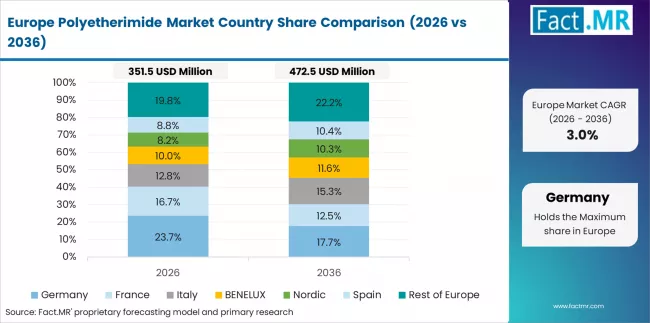
The polyetherimide market in Europe is projected to grow from USD 420.0 million in 2026 to USD 750.0 million by 2036, registering a CAGR of 6.0% over the forecast period. Germany is expected to maintain its leadership position with a 28.6% market share in 2026, declining slightly to 28.2% by 2036, supported by its advanced automotive industry and aerospace innovation capabilities.
France follows with a 21.9% share in 2026, projected to reach 22.2% by 2036, driven by comprehensive aerospace development and advanced materials industry applications. The United Kingdom holds a 18.3% share in 2026, expected to decrease to 18.0% by 2036 due to market diversification. Italy commands a 13.1% share, while Spain accounts for 9.5% in 2026.
The Rest of Europe region is anticipated to gain momentum, expanding its collective share from 8.6% to 9.0% by 2036, attributed to increasing advanced materials adoption in Nordic countries and emerging Eastern European aerospace manufacturing implementing advanced polymer technologies.
Unfilled Grade Applications Dominate High-Performance Manufacturing in Japan
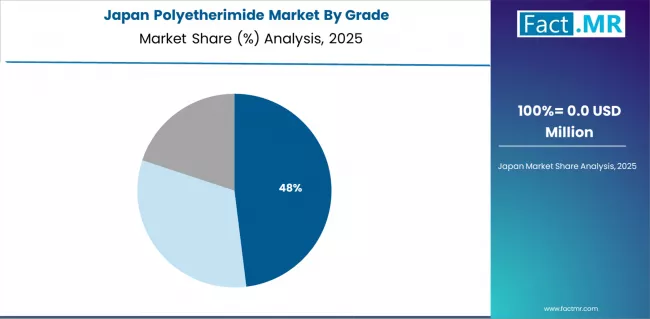
The Japanese polyetherimide market demonstrates a mature and precision-focused landscape, characterized by advanced integration of unfilled grade technologies with existing advanced manufacturing infrastructure across production facilities, electronics networks, and aerospace operations.
Japan's emphasis on quality excellence and materials precision drives demand for high reliability polyetherimide solutions that support comprehensive performance initiatives and quality requirements in manufacturing operations.
The market benefits from strong partnerships between international materials providers like SABIC, RTP Co., and domestic manufacturing leaders, including established electronics and precision manufacturing companies, creating comprehensive service ecosystems that prioritize materials quality and technical precision programs.
Manufacturing centers in major industrial regions showcase advanced polyetherimide implementations where high-performance systems achieve quality improvements through integrated advanced manufacturing programs.
Electronics Applications Lead Advanced Materials Services in South Korea
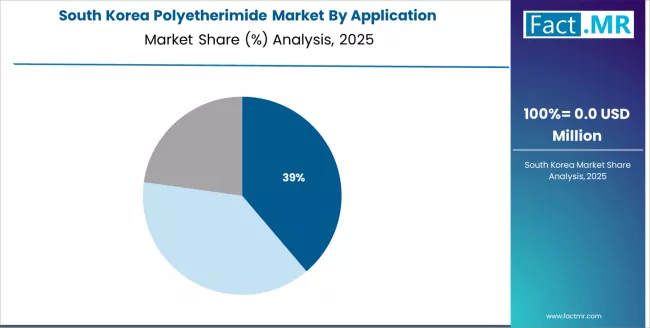
The South Korean polyetherimide market is characterized by strong international electronics application presence, with companies like Ensinger, Quadrant AG, and Toray maintaining dominant positions through comprehensive system integration and technical services capabilities for electronics modernization and advanced manufacturing applications.
The market is demonstrating a growing emphasis on localized technical support and rapid deployment capabilities, as Korean companies increasingly demand customized solutions that integrate with domestic electronics infrastructure and advanced materials systems deployed across major technology centers and manufacturing facilities.
Local materials companies and regional electronics integrators are gaining market share through strategic partnerships with global providers, offering specialized services including technical training programs and certification services for advanced materials specialists.
The competitive landscape shows increasing collaboration between multinational materials companies and Korean technology specialists, creating hybrid service models that combine international materials expertise with local market knowledge and electronics relationship management.
Competitive Landscape of the Polyetherimide Market
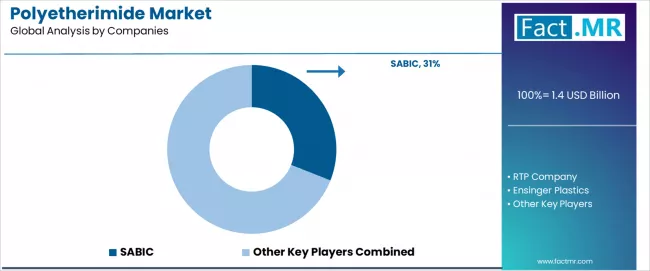
The polyetherimide market is characterized by competition among established polymer manufacturers, specialized high-performance materials producers, and diversified advanced materials companies.
Companies are investing in advanced processing technology development, application optimization innovation, product portfolio expansion, and end-user specific grade development to deliver high-performance, reliable, and cost-effective polyetherimide solutions.
Innovation in processing enhancement methods, specialized grade development, and advanced application technologies is central to strengthening market position and competitive advantage.
SABIC leads the market with a 31.0% share, offering comprehensive polyetherimide solutions with a focus on aerospace applications, advanced processing technologies, and specialized grades across diverse industrial and electronics distribution channels.
The company has announced major capacity expansion initiatives and investments in next-generation materials to support growing global demand for high-performance polymers and advanced engineering plastics.
RTP Co. provides innovative polymer solutions with emphasis on custom compounding and specialty applications, while Ensinger delivers high-performance engineering plastics with focus on precision manufacturing and industrial applications.
Quadrant AG offers comprehensive advanced materials with specialized polyetherimide offerings for multiple industrial categories, and Toray provides advanced polymer technologies with emphasis on performance optimization and specialty applications.
Mitsubishi Chemical specializes in high-performance materials with advanced polyetherimide technologies, while Solvay focuses on aerospace and industrial applications. Other key players including PolyOne, Roechling, and Avient contribute to market competition through specialized processing capabilities and advanced materials expertise.
Polyetherimide Market - Stakeholder Contribution Framework
Polyetherimide represents a high-performance polymer segment within aerospace and advanced manufacturing applications, projected to grow from USD 1.4 billion in 2025 to USD 2.5 billion by 2035 at a 6.0% CAGR.
These advanced polymer products—primarily unfilled, glass-filled, and specialty configurations for multiple applications—serve as critical engineering materials in aerospace components, automotive applications, electronics housing, and industrial equipment where high-temperature resistance, mechanical strength, and design flexibility are essential.
Market expansion is driven by increasing aerospace industry growth, growing automotive lightweighting trends, expanding electronics miniaturization, and rising demand for high-performance polymer solutions across diverse aerospace, automotive, electronics, and industrial sectors.
How Materials Regulators Could Strengthen Performance Standards and Safety Assurance?
- High-Performance Materials Standards: Establish comprehensive technical specifications for polyetherimide products, including mechanical property requirements, thermal resistance standards, safety validation protocols, and quality guidelines that ensure consistent performance across aerospace, automotive, electronics, and industrial applications.
- Aerospace Certification Integration: Develop regulatory frameworks that incentivize advanced materials adoption, requiring manufacturers to implement aerospace-grade quality systems, utilize performance validation protocols, incorporate safety procedures, and achieve measurable performance improvements in polyetherimide development and manufacturing.
- Quality Assurance Requirements: Implement mandatory quality control standards for polyetherimide manufacturing, including mechanical testing protocols, thermal stability verification measures, and performance validation systems that ensure material reliability and application safety across diverse end-use sectors.
- Aerospace Grade Guidelines: Create specialized regulations for aerospace-grade polyetherimide used in aviation applications, addressing stringent performance specifications, safety requirements, and certification procedures specific to aerospace applications requiring enhanced reliability and performance consistency.
- Innovation Support Programs: Provide regulatory facilitation and research incentives for development of next-generation polymer technologies that improve mechanical performance, enhance thermal properties, and enable emerging applications in advanced aerospace and automotive systems.
How Industry Associations Could Advance Materials Standards and Market Development?
- Materials Best Practices: Develop comprehensive technical guidelines for polyetherimide selection, processing optimization, and application techniques that maximize performance benefits, ensure material reliability, and maintain cost-effectiveness across aerospace manufacturing, automotive production, and electronics applications.
- Performance Benchmarking: Establish industry-wide metrics for materials performance, including mechanical property assessment, thermal stability measurement, processing efficiency evaluation, and application performance documentation that enable comparative analysis and drive continuous improvement toward performance optimization objectives.
- Technical Training Programs: Create specialized education initiatives for materials engineers, processing specialists, and application technicians covering polyetherimide characteristics, processing requirements, performance optimization, and application techniques across diverse advanced materials applications.
- Materials Standardization: Develop standardized testing methodologies for polyetherimide evaluation, including mechanical assessment, thermal analysis, processing evaluation, and application-specific performance metrics that facilitate objective material comparison and performance validation.
- Industry Collaboration: Facilitate partnerships between polyetherimide suppliers, aerospace manufacturers, automotive companies, and electronics producers to advance materials technology development, address emerging performance challenges, and accelerate innovation in high-performance polymer applications.
How Polyetherimide Manufacturers Could Drive Innovation and Market Leadership?
- Advanced Processing Technologies: Invest in processing enhancement, materials development optimization, performance improvement initiatives, and quality advancement programs that enhance material properties while maintaining cost competitiveness and regulatory compliance in global markets.
- Specialized Grade Development: Develop specialized polyetherimide formulations with enhanced performance characteristics, including optimized mechanical properties, improved thermal stability, increased processing efficiency, and application-specific performance attributes for emerging advanced materials segments.
- Quality Management Integration: Implement intelligent quality control systems with real-time performance monitoring, predictive quality assessment, automated testing verification, and data analytics that optimize production consistency, ensure material reliability, and reduce manufacturing variability.
- Application Technical Support: Establish comprehensive customer service capabilities providing materials consultation, processing assistance, application troubleshooting, and technical expertise that strengthen customer relationships and enable successful advanced materials implementation.
- Global Supply Excellence: Develop regional production networks, specialized supply chain management, reliable quality assurance systems, and responsive customer service that ensure consistent material availability, maintain performance standards, and support customer advanced materials requirements worldwide.
How End-User Industries Could Optimize Materials Performance and Design Success?
- Strategic Materials Selection: Conduct comprehensive assessments of performance requirements, application constraints, cost considerations, and design specifications to optimize polyetherimide selection and achieve desired material characteristics while managing total system costs and performance objectives.
- Design Optimization: Implement advanced development methodologies utilizing materials testing, performance evaluation, and systematic design assessment to maximize polyetherimide performance benefits, minimize application issues, and optimize overall system effectiveness and reliability.
- Performance Management: Develop optimized processing protocols, quality control procedures, and performance validation that ensure effective polyetherimide utilization, maximize material benefits, and maintain consistent performance throughout manufacturing operations.
- Innovation Integration: Incorporate advanced materials methodologies, performance optimization principles, and design excellence considerations into materials selection and application processes that support comprehensive performance objectives and competitive advantage.
- Strategic Partnerships: Establish strategic partnerships with polyetherimide suppliers for joint development programs, materials optimization initiatives, and co-innovation projects that address specific performance challenges and accelerate advanced materials commercialization.
How Research Institutions Could Enable Advanced Materials Technology Advancement?
- Fundamental Materials Research: Conduct scientific investigations into polyetherimide chemistry, performance mechanisms, processing optimization, and application enhancement that advance fundamental understanding and enable breakthrough innovations in high-performance polymer technology and materials science.
- Processing Technology Development: Develop novel manufacturing methods, including advanced processing techniques, sustainable production approaches, and performance enhancement technologies that improve materials properties while maintaining cost effectiveness and environmental viability.
- Application Innovation: Investigate emerging applications for polyetherimide in next-generation aerospace, advanced automotive, miniaturized electronics, and specialized industrial applications that create new market opportunities and expand high-performance materials potential.
- Materials Research Capabilities: Provide advanced characterization services utilizing mechanical testing, thermal analysis, processing evaluation, and performance assessment methodologies that enable detailed understanding of polyetherimide properties and advanced applications.
- Technology Transfer Programs: Facilitate technology commercialization through licensing agreements, startup incubation programs, technical publications, and collaborative research projects that accelerate advanced materials innovation adoption and strengthen industry-academia partnerships.
How Investors and Financial Enablers Could Support Advanced Materials Market Growth?
- Production Infrastructure Investment: Provide capital for polyetherimide manufacturing facility construction, production capacity expansion, and technology upgrade projects that address growing advanced materials demand while improving operational efficiency and performance capabilities.
- Materials Innovation Financing: Fund research and development of breakthrough polyetherimide technologies, including advanced processing methods, specialized grade development, and novel application innovations that address current market limitations and create competitive advantages.
- Performance Enhancement Support: Finance materials advancement initiatives, quality improvement programs, processing optimization development, and performance research that enhance materials capabilities and position manufacturers for long-term market acceptance and growth.
- Market Expansion Investment: Support strategic acquisitions, market entry initiatives, distribution network development, and customer technical service capabilities that accelerate geographic expansion and strengthen competitive positions in high-growth advanced materials markets.
- Technology Development: Provide financing and technical assistance for polyetherimide production facilities in developing economies, creating new advanced materials supply capabilities, supporting local technology development, and expanding global market access for high-performance polymer solutions.
Key Players in the Polyetherimide Market
- SABIC
- RTP Company
- Ensinger Plastics
- Röchling Group
- Mitsubishi Chemical Advanced Materials
- Toray Industries
- Solvay SA
- Kuraray Europe GmbH
- Honeywell International Inc.
- 3M Company
Bibliography
- U.S. Congress. (2022). CHIPS and Science Act: Semiconductor manufacturing investment incentives. U.S. Government.
- European Commission. (2023). European Chips Act: Strategic investments in semiconductor supply chain. European Commission.
- International Organization for Standardization. (2023). ISO 10993-1: Biological evaluation of medical devices - Part 1. ISO.
- Society of Plastics Engineers. (2024). High-performance thermoplastics market survey and property database. SPE.
- OECD. (2024). Advanced engineering materials and semiconductor supply chain statistics. Organisation for Economic Co-operation and Development.
- UL Standards. (2023). UL 94: Standard for tests for flammability of plastic materials for parts in devices and appliances. UL.
This bibliography is provided for reader reference. The full Fact.MR report contains the complete reference list with primary research documentation.
This Report Addresses
- Market sizing and quantitative forecast metrics detailing total addressable demand for the Polyetherimide across all major end-use verticals from 2026 through 2036.
- Segmentation analysis evaluating adoption patterns across Grade, Application, and End Use categories to identify highest-return investment opportunities.
- Regional deployment intelligence comparing demand acceleration across Asia Pacific, North America, and Europe against baseline structural constraints.
- Regulatory compliance assessment identifying how evolving environmental standards, material safety mandates, and procurement specifications reshape demand allocation.
- Competitive landscape evaluation tracking consolidation activity, capacity investments, and technology differentiation strategies among leading and emerging market participants.
- Strategic capital guidance defining procurement thresholds, capacity scaling benchmarks, and supply chain risk factors relevant to manufacturers and investors.
- Supply chain vulnerability analysis isolating raw material concentration risks, logistics bottlenecks, and feedstock pricing pressures affecting margin sustainability.
- Custom data delivery formats encompassing interactive dashboards, raw Excel datasets, and comprehensive PDF narrative reports for integration into internal planning models.
Polyetherimide Market Definition
Polyetherimide in this report refers to amorphous aromatic thermoplastic polymers based on the ether-imide repeat unit structure, produced through melt polymerization and sold in pellet, rod, sheet, and machined component forms for high-temperature electrical, structural, and medical device applications.
Polyetherimide Market Inclusions
Coverage includes all PEI resin grades and specialty compounds sold to injection molders, extruders, and machined parts fabricators globally. PEI stock shapes (rod, sheet, tube) for precision machining are included alongside injection-molded and extruded product supply.
Polyetherimide Market Exclusions
Excluded are thermoset polyimide films and laminates, bismaleimide resin systems used in aerospace composite prepregs, and polybenzimidazole materials that share high-temperature performance characteristics but are chemically distinct from PEI.
Polyetherimide Market Research Methodology
- Primary Research: Direct engagements with industry participants including raw material suppliers, technology integrators, and end-use procurement teams provided the qualitative foundation for demand forecasting and competitive positioning analysis.
- Desk Research: Publicly available government trade databases, standards bodies publications, corporate annual reports, investor presentations, and peer-reviewed academic papers served as the foundation for quantitative benchmarking.
- Market-Sizing and Forecasting: Segment-level sizing applied consumption volume data anchored to production and import-export statistics from national statistical agencies and trade bodies, adjusted for regional growth differentials.
- Data Validation and Update Cycle: All segment and country forecasts underwent independent review against disclosed capital project pipelines, regulatory approval records, and publicly filed corporate expansions. Outputs are refreshed on a defined annual cycle.
Scope of the Report
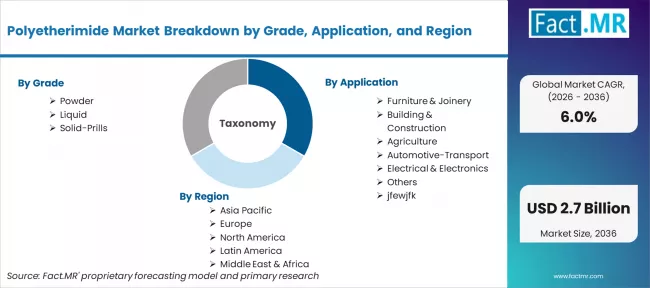
| Metric | Value |
|---|---|
| Quantitative Units | USD 1.48 billion to USD 2.66 billion, at a CAGR of 6.00% |
| Market Definition | Polyetherimide covers unfilled, glass-filled, and specialty PEI grades for electronics, automotive, aerospace, medical, and industrial applications across injection molding, extrusion, and machining processing routes. |
| Grade Segmentation | Unfilled, Glass-filled, Others |
| Application Segmentation | Electronics, Automotive, Others |
| End Use Segmentation | Industrial, Consumer, Aerospace/Others |
| Regions Covered | North America, Latin America, Europe, East Asia, South Asia, Oceania, Middle East & Africa |
| Countries Covered | USA, Mexico, Germany, France, UK, South Korea, Japan, and 40 plus countries |
| Key Companies Profiled | SABIC, RTP Company, Ensinger Plastics, Röchling Group, Mitsubishi Chemical Advanced Materials, Toray Industries, Solvay SA, Honeywell International Inc. |
| Forecast Period | 2026 to 2036 |
| Approach | Hybrid bottom-up and top-down modeling anchored to publicly verified production, trade, and regulatory data |
Polyetherimide Market by Segments
-
Grade :
- Unfilled
- Glass-filled
- Others
-
Application :
- Electronics
- Automotive
- Others
-
End Use :
- Industrial
- Consumer
- Aerospace/Others
-
Region :
-
East Asia
- China
- Japan
- South Korea
- Taiwan
- Rest of East Asia
-
Europe
- Germany
- United Kingdom
- France
- Italy
- Spain
- Netherlands
- Nordic
- BENELUX
- Rest of Europe
-
North America
- United States
- Canada
- Mexico
-
South Asia
- India
- Pakistan
- Bangladesh
- Rest of South Asia
-
Latin America
- Brazil
- Argentina
- Chile
- Rest of Latin America
-
Middle East & Africa
- Kingdom of Saudi Arabia
- Other GCC Countries
- Turkey
- South Africa
- Other African Union
- Rest of Middle East & Africa
-
Eastern Europe
- Russia
- Poland
- Czech Republic
- Rest of Eastern Europe
-
- Frequently Asked Questions -
How large is the Polyetherimide Market in 2026?
The polyetherimide market is valued at USD 1.48 billion in 2026, growing from USD 1.4 billion in 2025.
What will the Polyetherimide Market size reach by 2036?
The market is projected to reach USD 2.66 billion by 2036 per Fact.MR analysis.
What CAGR is forecast for the Polyetherimide Market from 2026 to 2036?
The polyetherimide market is forecast to grow at a CAGR of 6.00% during the 2026 to 2036 forecast period.
Which Grade type leads the Polyetherimide Market in 2026?
Unfilled PEI holds 46% market share in 2026, providing the inherent flame retardancy, electrical insulation, and dimensional stability required for electronics, medical, and semiconductor applications.
Which Application segment dominates the Polyetherimide Market?
Electronics accounts for 37% of market share in 2026, driven by wafer carrier trays, IC test sockets, and high-temperature connector applications in semiconductor manufacturing equipment.
Which country leads growth in the Polyetherimide Market?
The USA records the highest CAGR at 6.5% through 2036, driven by semiconductor manufacturing expansion under the CHIPS Act, aerospace component adoption, and medical device sterilizable component demand.
What is included in the scope of this report?
The report covers unfilled, glass-filled, and specialty PEI grades for electronics, automotive, aerospace, medical, and industrial applications processed by injection molding, extrusion, and machining globally.
What does Fact.MR exclude from the Polyetherimide Market scope?
Polyamide-imide, thermoset polyimide films, bismaleimide composites, polysulfone, and PES polymers are excluded from the polyetherimide market valuation.
Table of Content
- Executive Summary
- Global Market Outlook
- Demand to side Trends
- Supply to side Trends
- Technology Roadmap Analysis
- Analysis and Recommendations
- Market Overview
- Market Coverage / Taxonomy
- Market Definition / Scope / Limitations
- Research Methodology
- Chapter Orientation
- Analytical Lens and Working Hypotheses
- Market Structure, Signals, and Trend Drivers
- Benchmarking and Cross-market Comparability
- Market Sizing, Forecasting, and Opportunity Mapping
- Research Design and Evidence Framework
- Desk Research Programme (Secondary Evidence)
- Company Annual and Sustainability Reports
- Peer-reviewed Journals and Academic Literature
- Corporate Websites, Product Literature, and Technical Notes
- Earnings Decks and Investor Briefings
- Statutory Filings and Regulatory Disclosures
- Technical White Papers and Standards Notes
- Trade Journals, Industry Magazines, and Analyst Briefs
- Conference Proceedings, Webinars, and Seminar Materials
- Government Statistics Portals and Public Data Releases
- Press Releases and Reputable Media Coverage
- Specialist Newsletters and Curated Briefings
- Sector Databases and Reference Repositories
- Fact.MR Internal Proprietary Databases and Historical Market Datasets
- Subscription Datasets and Paid Sources
- Social Channels, Communities, and Digital Listening Inputs
- Additional Desk Sources
- Expert Input and Fieldwork (Primary Evidence)
- Primary Modes
- Qualitative Interviews and Expert Elicitation
- Quantitative Surveys and Structured Data Capture
- Blended Approach
- Why Primary Evidence is Used
- Field Techniques
- Interviews
- Surveys
- Focus Groups
- Observational and In-context Research
- Social and Community Interactions
- Stakeholder Universe Engaged
- C-suite Leaders
- Board Members
- Presidents and Vice Presidents
- R&D and Innovation Heads
- Technical Specialists
- Domain Subject-matter Experts
- Scientists
- Physicians and Other Healthcare Professionals
- Governance, Ethics, and Data Stewardship
- Research Ethics
- Data Integrity and Handling
- Primary Modes
- Tooling, Models, and Reference Databases
- Desk Research Programme (Secondary Evidence)
- Data Engineering and Model Build
- Data Acquisition and Ingestion
- Cleaning, Normalisation, and Verification
- Synthesis, Triangulation, and Analysis
- Quality Assurance and Audit Trail
- Market Background
- Market Dynamics
- Drivers
- Restraints
- Opportunity
- Trends
- Scenario Forecast
- Demand in Optimistic Scenario
- Demand in Likely Scenario
- Demand in Conservative Scenario
- Opportunity Map Analysis
- Product Life Cycle Analysis
- Supply Chain Analysis
- Investment Feasibility Matrix
- Value Chain Analysis
- PESTLE and Porter’s Analysis
- Regulatory Landscape
- Regional Parent Market Outlook
- Production and Consumption Statistics
- Import and Export Statistics
- Market Dynamics
- Global Market Analysis 2021 to 2025 and Forecast, 2026 to 2036
- Historical Market Size Value (USD Million) Analysis, 2021 to 2025
- Current and Future Market Size Value (USD Million) Projections, 2026 to 2036
- Y to o to Y Growth Trend Analysis
- Absolute $ Opportunity Analysis
- Global Market Pricing Analysis 2021 to 2025 and Forecast 2026 to 2036
- Global Market Analysis 2021 to 2025 and Forecast 2026 to 2036, By Grade
- Introduction / Key Findings
- Historical Market Size Value (USD Million) Analysis By Grade, 2021 to 2025
- Current and Future Market Size Value (USD Million) Analysis and Forecast By Grade, 2026 to 2036
- Unfilled
- Glass-filled
- Others
- Unfilled
- Y to o to Y Growth Trend Analysis By Grade, 2021 to 2025
- Absolute $ Opportunity Analysis By Grade, 2026 to 2036
- Global Market Analysis 2021 to 2025 and Forecast 2026 to 2036, By Application
- Introduction / Key Findings
- Historical Market Size Value (USD Million) Analysis By Application, 2021 to 2025
- Current and Future Market Size Value (USD Million) Analysis and Forecast By Application, 2026 to 2036
- Electronics
- Automotive
- Others
- Electronics
- Y to o to Y Growth Trend Analysis By Application, 2021 to 2025
- Absolute $ Opportunity Analysis By Application, 2026 to 2036
- Global Market Analysis 2021 to 2025 and Forecast 2026 to 2036, By End Use
- Introduction / Key Findings
- Historical Market Size Value (USD Million) Analysis By End Use, 2021 to 2025
- Current and Future Market Size Value (USD Million) Analysis and Forecast By End Use, 2026 to 2036
- Industrial
- Consumer
- Aerospace/Others
- Industrial
- Y to o to Y Growth Trend Analysis By End Use, 2021 to 2025
- Absolute $ Opportunity Analysis By End Use, 2026 to 2036
- Global Market Analysis 2021 to 2025 and Forecast 2026 to 2036, By Region
- Introduction
- Historical Market Size Value (USD Million) Analysis By Region, 2021 to 2025
- Current Market Size Value (USD Million) Analysis and Forecast By Region, 2026 to 2036
- North America
- Latin America
- Western Europe
- Eastern Europe
- East Asia
- South Asia and Pacific
- Middle East & Africa
- Market Attractiveness Analysis By Region
- North America Market Analysis 2021 to 2025 and Forecast 2026 to 2036, By Country
- Historical Market Size Value (USD Million) Trend Analysis By Market Taxonomy, 2021 to 2025
- Market Size Value (USD Million) Forecast By Market Taxonomy, 2026 to 2036
- By Country
- USA
- Canada
- Mexico
- By Grade
- By Application
- By End Use
- By Country
- Market Attractiveness Analysis
- By Country
- By Grade
- By Application
- By End Use
- Key Takeaways
- Latin America Market Analysis 2021 to 2025 and Forecast 2026 to 2036, By Country
- Historical Market Size Value (USD Million) Trend Analysis By Market Taxonomy, 2021 to 2025
- Market Size Value (USD Million) Forecast By Market Taxonomy, 2026 to 2036
- By Country
- Brazil
- Chile
- Rest of Latin America
- By Grade
- By Application
- By End Use
- By Country
- Market Attractiveness Analysis
- By Country
- By Grade
- By Application
- By End Use
- Key Takeaways
- Western Europe Market Analysis 2021 to 2025 and Forecast 2026 to 2036, By Country
- Historical Market Size Value (USD Million) Trend Analysis By Market Taxonomy, 2021 to 2025
- Market Size Value (USD Million) Forecast By Market Taxonomy, 2026 to 2036
- By Country
- Germany
- UK
- Italy
- Spain
- France
- Nordic
- BENELUX
- Rest of Western Europe
- By Grade
- By Application
- By End Use
- By Country
- Market Attractiveness Analysis
- By Country
- By Grade
- By Application
- By End Use
- Key Takeaways
- Eastern Europe Market Analysis 2021 to 2025 and Forecast 2026 to 2036, By Country
- Historical Market Size Value (USD Million) Trend Analysis By Market Taxonomy, 2021 to 2025
- Market Size Value (USD Million) Forecast By Market Taxonomy, 2026 to 2036
- By Country
- Russia
- Poland
- Hungary
- Balkan & Baltic
- Rest of Eastern Europe
- By Grade
- By Application
- By End Use
- By Country
- Market Attractiveness Analysis
- By Country
- By Grade
- By Application
- By End Use
- Key Takeaways
- East Asia Market Analysis 2021 to 2025 and Forecast 2026 to 2036, By Country
- Historical Market Size Value (USD Million) Trend Analysis By Market Taxonomy, 2021 to 2025
- Market Size Value (USD Million) Forecast By Market Taxonomy, 2026 to 2036
- By Country
- China
- Japan
- South Korea
- By Grade
- By Application
- By End Use
- By Country
- Market Attractiveness Analysis
- By Country
- By Grade
- By Application
- By End Use
- Key Takeaways
- South Asia and Pacific Market Analysis 2021 to 2025 and Forecast 2026 to 2036, By Country
- Historical Market Size Value (USD Million) Trend Analysis By Market Taxonomy, 2021 to 2025
- Market Size Value (USD Million) Forecast By Market Taxonomy, 2026 to 2036
- By Country
- India
- ASEAN
- Australia & New Zealand
- Rest of South Asia and Pacific
- By Grade
- By Application
- By End Use
- By Country
- Market Attractiveness Analysis
- By Country
- By Grade
- By Application
- By End Use
- Key Takeaways
- Middle East & Africa Market Analysis 2021 to 2025 and Forecast 2026 to 2036, By Country
- Historical Market Size Value (USD Million) Trend Analysis By Market Taxonomy, 2021 to 2025
- Market Size Value (USD Million) Forecast By Market Taxonomy, 2026 to 2036
- By Country
- Kingdom of Saudi Arabia
- Other GCC Countries
- Turkiye
- South Africa
- Other African Union
- Rest of Middle East & Africa
- By Grade
- By Application
- By End Use
- By Country
- Market Attractiveness Analysis
- By Country
- By Grade
- By Application
- By End Use
- Key Takeaways
- Key Countries Market Analysis
- USA
- Pricing Analysis
- Market Share Analysis, 2025
- By Grade
- By Application
- By End Use
- Canada
- Pricing Analysis
- Market Share Analysis, 2025
- By Grade
- By Application
- By End Use
- Mexico
- Pricing Analysis
- Market Share Analysis, 2025
- By Grade
- By Application
- By End Use
- Brazil
- Pricing Analysis
- Market Share Analysis, 2025
- By Grade
- By Application
- By End Use
- Chile
- Pricing Analysis
- Market Share Analysis, 2025
- By Grade
- By Application
- By End Use
- Germany
- Pricing Analysis
- Market Share Analysis, 2025
- By Grade
- By Application
- By End Use
- UK
- Pricing Analysis
- Market Share Analysis, 2025
- By Grade
- By Application
- By End Use
- Italy
- Pricing Analysis
- Market Share Analysis, 2025
- By Grade
- By Application
- By End Use
- Spain
- Pricing Analysis
- Market Share Analysis, 2025
- By Grade
- By Application
- By End Use
- France
- Pricing Analysis
- Market Share Analysis, 2025
- By Grade
- By Application
- By End Use
- India
- Pricing Analysis
- Market Share Analysis, 2025
- By Grade
- By Application
- By End Use
- ASEAN
- Pricing Analysis
- Market Share Analysis, 2025
- By Grade
- By Application
- By End Use
- Australia & New Zealand
- Pricing Analysis
- Market Share Analysis, 2025
- By Grade
- By Application
- By End Use
- China
- Pricing Analysis
- Market Share Analysis, 2025
- By Grade
- By Application
- By End Use
- Japan
- Pricing Analysis
- Market Share Analysis, 2025
- By Grade
- By Application
- By End Use
- South Korea
- Pricing Analysis
- Market Share Analysis, 2025
- By Grade
- By Application
- By End Use
- Russia
- Pricing Analysis
- Market Share Analysis, 2025
- By Grade
- By Application
- By End Use
- Poland
- Pricing Analysis
- Market Share Analysis, 2025
- By Grade
- By Application
- By End Use
- Hungary
- Pricing Analysis
- Market Share Analysis, 2025
- By Grade
- By Application
- By End Use
- Kingdom of Saudi Arabia
- Pricing Analysis
- Market Share Analysis, 2025
- By Grade
- By Application
- By End Use
- Turkiye
- Pricing Analysis
- Market Share Analysis, 2025
- By Grade
- By Application
- By End Use
- South Africa
- Pricing Analysis
- Market Share Analysis, 2025
- By Grade
- By Application
- By End Use
- USA
- Market Structure Analysis
- Competition Dashboard
- Competition Benchmarking
- Market Share Analysis of Top Players
- By Regional
- By Grade
- By Application
- By End Use
- Competition Analysis
- Competition Deep Dive
- SABIC
- Overview
- Product Portfolio
- Profitability by Market Segments (Product/Age /Sales Channel/Region)
- Sales Footprint
- Strategy Overview
- Marketing Strategy
- Product Strategy
- Channel Strategy
- RTP Company
- Ensinger Plastics
- Röchling Group
- Mitsubishi Chemical Advanced Materials
- Toray Industries
- Solvay SA
- Kuraray Europe GmbH
- Honeywell International Inc.
- 3M Company
- SABIC
- Competition Deep Dive
- Assumptions & Acronyms Used
List Of Table
- Table 1: Global Market Value (USD Million) Forecast by Region, 2021 to 2036
- Table 2: Global Market Value (USD Million) Forecast by Grade, 2021 to 2036
- Table 3: Global Market Value (USD Million) Forecast by Application, 2021 to 2036
- Table 4: Global Market Value (USD Million) Forecast by End Use, 2021 to 2036
- Table 5: North America Market Value (USD Million) Forecast by Country, 2021 to 2036
- Table 6: North America Market Value (USD Million) Forecast by Grade, 2021 to 2036
- Table 7: North America Market Value (USD Million) Forecast by Application, 2021 to 2036
- Table 8: North America Market Value (USD Million) Forecast by End Use, 2021 to 2036
- Table 9: Latin America Market Value (USD Million) Forecast by Country, 2021 to 2036
- Table 10: Latin America Market Value (USD Million) Forecast by Grade, 2021 to 2036
- Table 11: Latin America Market Value (USD Million) Forecast by Application, 2021 to 2036
- Table 12: Latin America Market Value (USD Million) Forecast by End Use, 2021 to 2036
- Table 13: Western Europe Market Value (USD Million) Forecast by Country, 2021 to 2036
- Table 14: Western Europe Market Value (USD Million) Forecast by Grade, 2021 to 2036
- Table 15: Western Europe Market Value (USD Million) Forecast by Application, 2021 to 2036
- Table 16: Western Europe Market Value (USD Million) Forecast by End Use, 2021 to 2036
- Table 17: Eastern Europe Market Value (USD Million) Forecast by Country, 2021 to 2036
- Table 18: Eastern Europe Market Value (USD Million) Forecast by Grade, 2021 to 2036
- Table 19: Eastern Europe Market Value (USD Million) Forecast by Application, 2021 to 2036
- Table 20: Eastern Europe Market Value (USD Million) Forecast by End Use, 2021 to 2036
- Table 21: East Asia Market Value (USD Million) Forecast by Country, 2021 to 2036
- Table 22: East Asia Market Value (USD Million) Forecast by Grade, 2021 to 2036
- Table 23: East Asia Market Value (USD Million) Forecast by Application, 2021 to 2036
- Table 24: East Asia Market Value (USD Million) Forecast by End Use, 2021 to 2036
- Table 25: South Asia and Pacific Market Value (USD Million) Forecast by Country, 2021 to 2036
- Table 26: South Asia and Pacific Market Value (USD Million) Forecast by Grade, 2021 to 2036
- Table 27: South Asia and Pacific Market Value (USD Million) Forecast by Application, 2021 to 2036
- Table 28: South Asia and Pacific Market Value (USD Million) Forecast by End Use, 2021 to 2036
- Table 29: Middle East & Africa Market Value (USD Million) Forecast by Country, 2021 to 2036
- Table 30: Middle East & Africa Market Value (USD Million) Forecast by Grade, 2021 to 2036
- Table 31: Middle East & Africa Market Value (USD Million) Forecast by Application, 2021 to 2036
- Table 32: Middle East & Africa Market Value (USD Million) Forecast by End Use, 2021 to 2036
List Of Figures
- Figure 1: Global Market Pricing Analysis
- Figure 2: Global Market Value (USD Million) Forecast 2021 to 2036
- Figure 3: Global Market Value Share and BPS Analysis by Grade, 2026 and 2036
- Figure 4: Global Market Y-o-Y Growth Comparison by Grade, 2026 to 2036
- Figure 5: Global Market Attractiveness Analysis by Grade
- Figure 6: Global Market Value Share and BPS Analysis by Application, 2026 and 2036
- Figure 7: Global Market Y-o-Y Growth Comparison by Application, 2026 to 2036
- Figure 8: Global Market Attractiveness Analysis by Application
- Figure 9: Global Market Value Share and BPS Analysis by End Use, 2026 and 2036
- Figure 10: Global Market Y-o-Y Growth Comparison by End Use, 2026 to 2036
- Figure 11: Global Market Attractiveness Analysis by End Use
- Figure 12: Global Market Value (USD Million) Share and BPS Analysis by Region, 2026 and 2036
- Figure 13: Global Market Y-o-Y Growth Comparison by Region, 2026 to 2036
- Figure 14: Global Market Attractiveness Analysis by Region
- Figure 15: North America Market Incremental Dollar Opportunity, 2026 to 2036
- Figure 16: Latin America Market Incremental Dollar Opportunity, 2026 to 2036
- Figure 17: Western Europe Market Incremental Dollar Opportunity, 2026 to 2036
- Figure 18: Eastern Europe Market Incremental Dollar Opportunity, 2026 to 2036
- Figure 19: East Asia Market Incremental Dollar Opportunity, 2026 to 2036
- Figure 20: South Asia and Pacific Market Incremental Dollar Opportunity, 2026 to 2036
- Figure 21: Middle East & Africa Market Incremental Dollar Opportunity, 2026 to 2036
- Figure 22: North America Market Value Share and BPS Analysis by Country, 2026 and 2036
- Figure 23: North America Market Value Share and BPS Analysis by Grade, 2026 and 2036
- Figure 24: North America Market Y-o-Y Growth Comparison by Grade, 2026 to 2036
- Figure 25: North America Market Attractiveness Analysis by Grade
- Figure 26: North America Market Value Share and BPS Analysis by Application, 2026 and 2036
- Figure 27: North America Market Y-o-Y Growth Comparison by Application, 2026 to 2036
- Figure 28: North America Market Attractiveness Analysis by Application
- Figure 29: North America Market Value Share and BPS Analysis by End Use, 2026 and 2036
- Figure 30: North America Market Y-o-Y Growth Comparison by End Use, 2026 to 2036
- Figure 31: North America Market Attractiveness Analysis by End Use
- Figure 32: Latin America Market Value Share and BPS Analysis by Country, 2026 and 2036
- Figure 33: Latin America Market Value Share and BPS Analysis by Grade, 2026 and 2036
- Figure 34: Latin America Market Y-o-Y Growth Comparison by Grade, 2026 to 2036
- Figure 35: Latin America Market Attractiveness Analysis by Grade
- Figure 36: Latin America Market Value Share and BPS Analysis by Application, 2026 and 2036
- Figure 37: Latin America Market Y-o-Y Growth Comparison by Application, 2026 to 2036
- Figure 38: Latin America Market Attractiveness Analysis by Application
- Figure 39: Latin America Market Value Share and BPS Analysis by End Use, 2026 and 2036
- Figure 40: Latin America Market Y-o-Y Growth Comparison by End Use, 2026 to 2036
- Figure 41: Latin America Market Attractiveness Analysis by End Use
- Figure 42: Western Europe Market Value Share and BPS Analysis by Country, 2026 and 2036
- Figure 43: Western Europe Market Value Share and BPS Analysis by Grade, 2026 and 2036
- Figure 44: Western Europe Market Y-o-Y Growth Comparison by Grade, 2026 to 2036
- Figure 45: Western Europe Market Attractiveness Analysis by Grade
- Figure 46: Western Europe Market Value Share and BPS Analysis by Application, 2026 and 2036
- Figure 47: Western Europe Market Y-o-Y Growth Comparison by Application, 2026 to 2036
- Figure 48: Western Europe Market Attractiveness Analysis by Application
- Figure 49: Western Europe Market Value Share and BPS Analysis by End Use, 2026 and 2036
- Figure 50: Western Europe Market Y-o-Y Growth Comparison by End Use, 2026 to 2036
- Figure 51: Western Europe Market Attractiveness Analysis by End Use
- Figure 52: Eastern Europe Market Value Share and BPS Analysis by Country, 2026 and 2036
- Figure 53: Eastern Europe Market Value Share and BPS Analysis by Grade, 2026 and 2036
- Figure 54: Eastern Europe Market Y-o-Y Growth Comparison by Grade, 2026 to 2036
- Figure 55: Eastern Europe Market Attractiveness Analysis by Grade
- Figure 56: Eastern Europe Market Value Share and BPS Analysis by Application, 2026 and 2036
- Figure 57: Eastern Europe Market Y-o-Y Growth Comparison by Application, 2026 to 2036
- Figure 58: Eastern Europe Market Attractiveness Analysis by Application
- Figure 59: Eastern Europe Market Value Share and BPS Analysis by End Use, 2026 and 2036
- Figure 60: Eastern Europe Market Y-o-Y Growth Comparison by End Use, 2026 to 2036
- Figure 61: Eastern Europe Market Attractiveness Analysis by End Use
- Figure 62: East Asia Market Value Share and BPS Analysis by Country, 2026 and 2036
- Figure 63: East Asia Market Value Share and BPS Analysis by Grade, 2026 and 2036
- Figure 64: East Asia Market Y-o-Y Growth Comparison by Grade, 2026 to 2036
- Figure 65: East Asia Market Attractiveness Analysis by Grade
- Figure 66: East Asia Market Value Share and BPS Analysis by Application, 2026 and 2036
- Figure 67: East Asia Market Y-o-Y Growth Comparison by Application, 2026 to 2036
- Figure 68: East Asia Market Attractiveness Analysis by Application
- Figure 69: East Asia Market Value Share and BPS Analysis by End Use, 2026 and 2036
- Figure 70: East Asia Market Y-o-Y Growth Comparison by End Use, 2026 to 2036
- Figure 71: East Asia Market Attractiveness Analysis by End Use
- Figure 72: South Asia and Pacific Market Value Share and BPS Analysis by Country, 2026 and 2036
- Figure 73: South Asia and Pacific Market Value Share and BPS Analysis by Grade, 2026 and 2036
- Figure 74: South Asia and Pacific Market Y-o-Y Growth Comparison by Grade, 2026 to 2036
- Figure 75: South Asia and Pacific Market Attractiveness Analysis by Grade
- Figure 76: South Asia and Pacific Market Value Share and BPS Analysis by Application, 2026 and 2036
- Figure 77: South Asia and Pacific Market Y-o-Y Growth Comparison by Application, 2026 to 2036
- Figure 78: South Asia and Pacific Market Attractiveness Analysis by Application
- Figure 79: South Asia and Pacific Market Value Share and BPS Analysis by End Use, 2026 and 2036
- Figure 80: South Asia and Pacific Market Y-o-Y Growth Comparison by End Use, 2026 to 2036
- Figure 81: South Asia and Pacific Market Attractiveness Analysis by End Use
- Figure 82: Middle East & Africa Market Value Share and BPS Analysis by Country, 2026 and 2036
- Figure 83: Middle East & Africa Market Value Share and BPS Analysis by Grade, 2026 and 2036
- Figure 84: Middle East & Africa Market Y-o-Y Growth Comparison by Grade, 2026 to 2036
- Figure 85: Middle East & Africa Market Attractiveness Analysis by Grade
- Figure 86: Middle East & Africa Market Value Share and BPS Analysis by Application, 2026 and 2036
- Figure 87: Middle East & Africa Market Y-o-Y Growth Comparison by Application, 2026 to 2036
- Figure 88: Middle East & Africa Market Attractiveness Analysis by Application
- Figure 89: Middle East & Africa Market Value Share and BPS Analysis by End Use, 2026 and 2036
- Figure 90: Middle East & Africa Market Y-o-Y Growth Comparison by End Use, 2026 to 2036
- Figure 91: Middle East & Africa Market Attractiveness Analysis by End Use
- Figure 92: Global Market - Tier Structure Analysis
- Figure 93: Global Market - Company Share Analysis

Related Reports

Polyetherimide Market
About The Report
